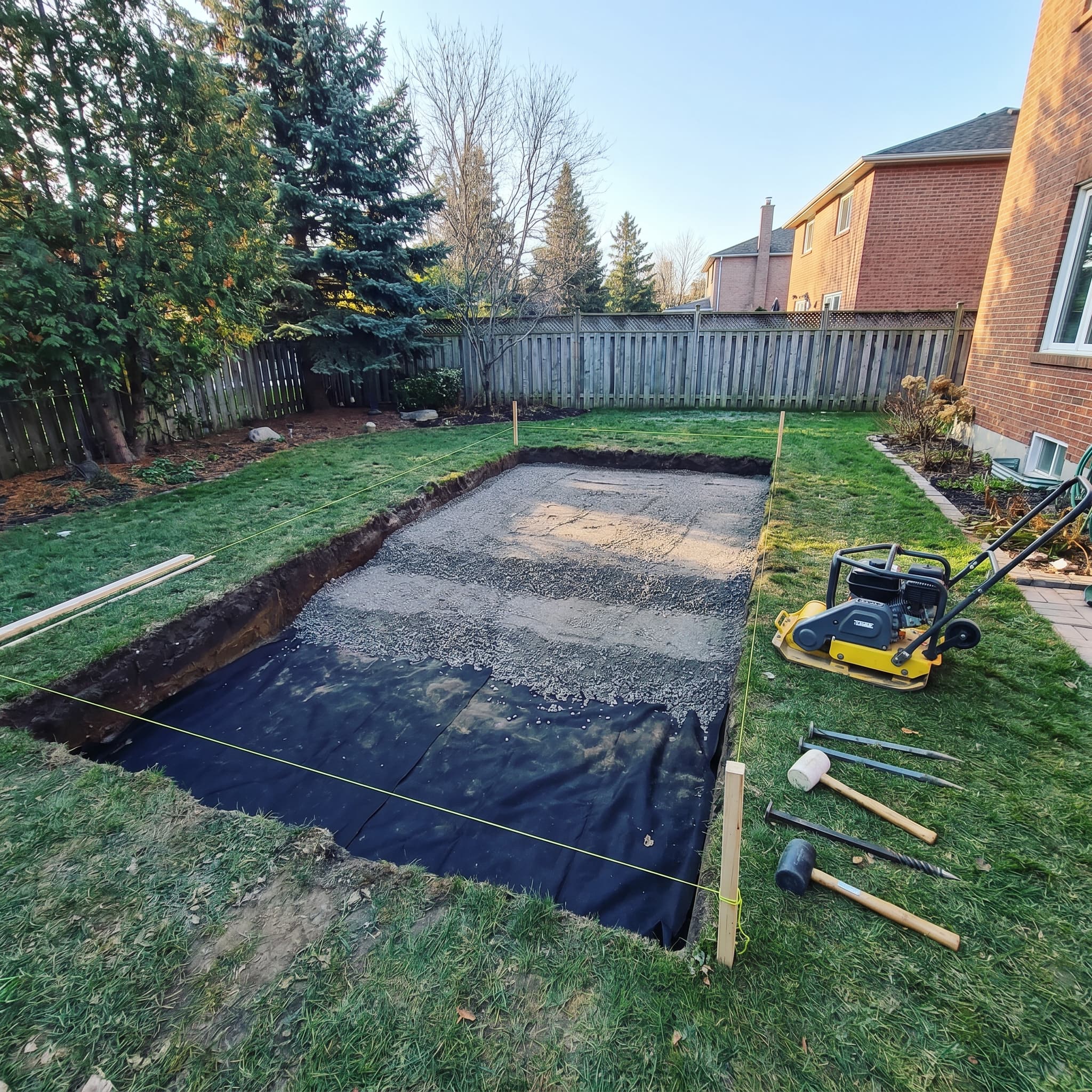
Proper base, proper drainage, done once — because water is the single biggest reason hardscapes fail.
Three things conspire against a patio or wall here — freeze-thaw cycles, heavy clay soil, and high water tables near the lake. Any one stresses a hardscape. Together, they break it.
Freeze-thaw is the obvious one. Water trapped under a patio freezes, expands about 9%, and lifts everything above it. Forty cycles a winter for five winters and the pavers heave, joints open, and the wall you built last summer starts leaning forward.
Clay is the quiet one. West GTA's clay has low permeability — water doesn't drain through it, it sits on top. Sandy soil sheds rain in hours. Clay holds it for days. That's why your neighbour's yard is still soggy Tuesday after a Saturday storm.
The water table is the hidden one. Across Oakville, Burlington, Mississauga, and Milton it can sit within a few feet of the surface. Dig to build a proper patio base and you'll often hit groundwater before you hit the right depth.
Most homeowners think “drainage” is one thing. It's two, and they need two different fixes.
Surface water is the rain and snowmelt running across your lot — off the roof, down the driveway, across the lawn. The fix is grading and conveyance: slopes that move water away from the house, plus channel drains, catch basins, and downspout extensions to capture it before it pools.
Subsurface water is the water already in the ground — rising water table, saturated clay, seepage pushing against a wall or foundation. The fix is a system buried behind or below the hardscape: perforated pipe (weeping tile) in clear stone, wrapped in filter fabric, daylit to a safe outlet or tied into a sump.
A contractor who only talks about “a little slope to the lawn” is solving half the problem. Proper backyard drainage ontario homeowners need almost always involves both.
Walk your yard after the next heavy rain. You're looking for:
See two or more of these? The drainage conversation happens before the patio conversation. Not after.
Our design sequence on every McCoy project runs in this order:
Proper yard grading before patio installation isn't an upsell — it's the sequence that makes the patio worth building.
The drainage toolkit isn't complicated. It's about picking the right tool for the water you have:
Every one of these is standard work for our crew, selected based on what the lot actually needs.
When Alex or Pieter walks your property, this is what's actually happening:
None of this takes long. Skipping it is how $40,000 patios end up torn out in year five.
Drainage work on a typical West GTA residential project runs anywhere from $3,000 for a few downspout tie-ins and regrading to $15,000+ for a full French drain system, channel drains, and engineered discharge routing.
Replacing a failed patio runs $30,000 to $80,000. Rebuilding a collapsed retaining wall and fixing the grade behind it, more.
The math is the same every time. Drainage done upfront is the cheapest insurance on the most expensive part of your build — the hardscape itself. Backed by our 3-year warranty, our drainage work is part of the reason we can stand behind every install we build.
Walk the yard 24 hours after a heavy rain. If water is still pooled anywhere — lawn, driveway, patio, against the foundation — you have a problem. Other tells: chalky white stains on existing pavers, moss in the lawn, soggy zones that never dry, downspouts dumping right at the house, or ice sheets in winter. Two or more and it's time for a proper assessment.
Yes, but it's usually more invasive and more expensive. Channel drains can be retrofitted at patio edges, downspout tie-ins can be added, and a French drain can sometimes go in beside a patio without lifting it. Full subsurface drainage under an existing patio usually means pulling the pavers and rebuilding the base. Fixing drainage first is always the better sequence.
A French drain is a perforated pipe buried in clear-stone gravel, wrapped in filter fabric, set below the problem area. Water in the soil flows into the stone, down into the pipe, and out to a safe discharge point. It handles subsurface water — the wet clay, the rising water table, the seepage behind a wall. On West GTA lots with heavy clay, a French drain is often the difference between a wall that lasts 30 years and one that leans in five.
No — they solve different problems. A channel drain is a linear trench drain with a grated top, installed at the surface to catch sheet flow before it hits a doorway, garage, or low patio edge. A French drain is buried below grade and catches subsurface water moving through the soil. Most properties with drainage issues need both, each doing its own job.
Almost always a base and drainage failure. Water got under the pavers, the base material washed out or saturated, and freeze-thaw heaved and dropped the surface repeatedly until the pavers sank into the low spots. The fix isn't re-leveling the pavers — it's rebuilding the base with proper compaction and fixing the drainage that caused the failure in the first place.
Most residential drainage scopes run 2–5 days on site, depending on how much trenching is involved and whether we're tying into existing downspouts or sump discharge. On combined drainage-and-hardscape projects, the drainage work happens first, then the site is restored and the hardscape goes on top. We lock the timeline at the estimate stage.
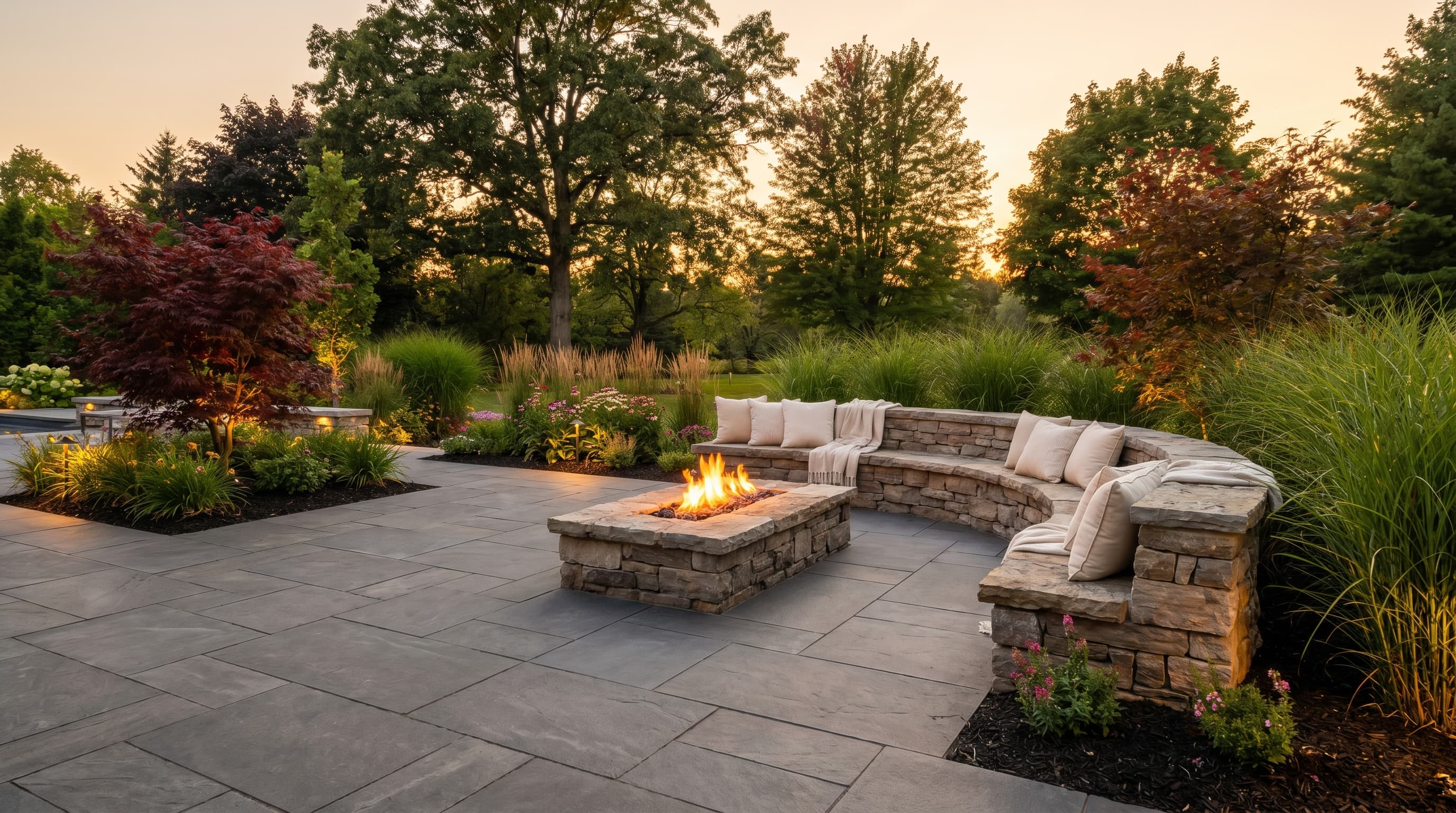
Scope, sequencing, timelines, and real costs for a full backyard build across Oakville, Burlington, Mississauga, and Milton.
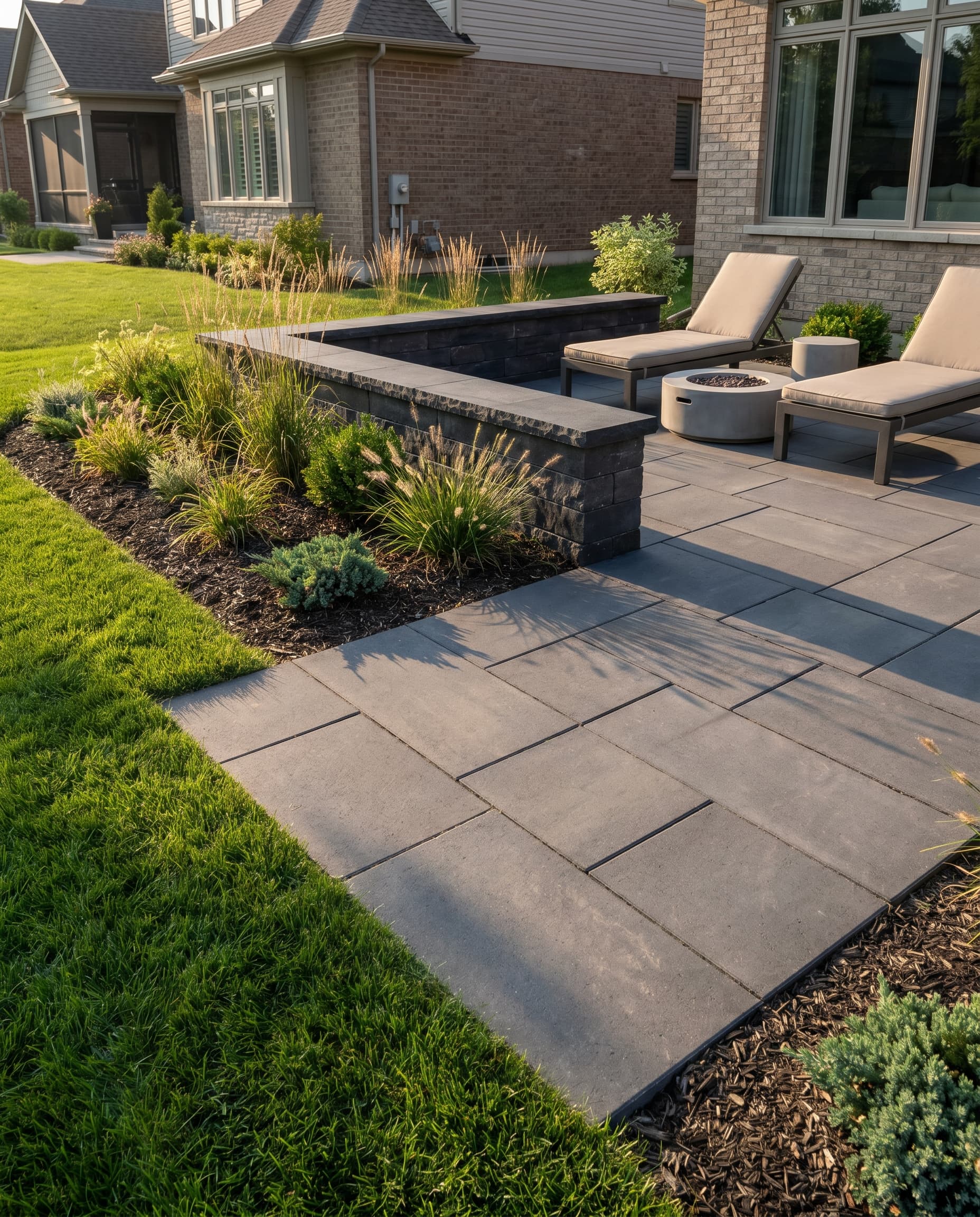
Base depth, geotextile, edge restraint — the hidden craftsmanship behind a paver patio still sitting level in year 15.
Share a little about what you want built and we'll set up a no-pressure consultation. Every hardscape is backed by our 3-year warranty.